

Investing in Lakewood, CA, Real Estate: 2026 Numbers, Strategies, and What to Check
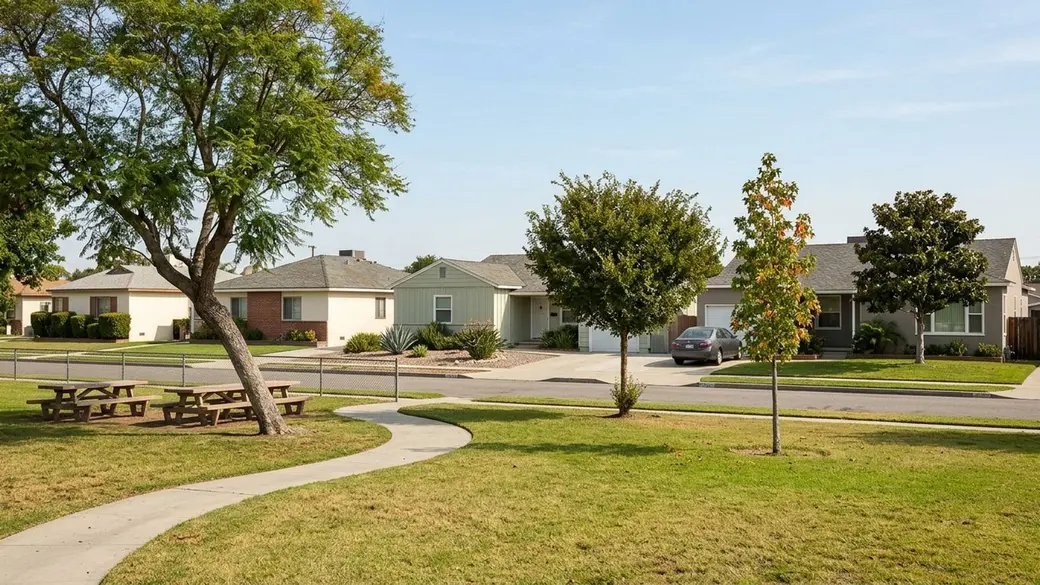
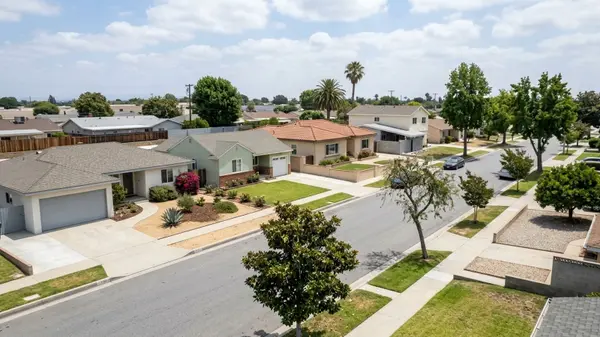
Buying an investment property in Lakewood means entering a market dominated by single-family homes that sell quickly and close to asking price. The housing stock is primarily houses built in the 1950s, which creates specific opportunities and real limits for buyers looking to generate rental income or add value.
The recent data points to a steady, competitive environment rather than a market full of deep discounts. Making the math work here requires a clear-eyed read of current rents, local zoning rules, and the actual costs of ownership before you write an offer.
Key takeaway
For most investors, Lakewood works best as a long-term single-family hold where you add value, with an ADU or by living in part of the property, rather than as a quick cash-flow or flip play. Houses recently sold above asking price, so there's little discount to buy into. If you need more negotiating room, look at the small condo and townhome segment, but run the rent math in this guide on any property before you offer.
Who this guide is for
You're deciding whether to buy a Lakewood property as a rental or value-add investment and need to know which strategy the local numbers can support.
Is Lakewood, CA a good place to invest in real estate?
Lakewood is a near-list-price, single-family market. Out of 117 total sales in the 90 days ending September 30, 2026, 108 were houses, selling at a median 100.5% of list price. With 48.1% of those single-family homes going above asking, plan to pay full price and compete on terms rather than expecting meaningful price cuts.
An investor's return here has to come from rent verified before the offer and value added after closing, such as an ADU, a live-in unit, or renovation. Year-over-year price growth was modest during this period, so you can't count on rapid appreciation to rescue a thin deal. The At a glance section below has the full set of current market figures.
To understand how these numbers translate to daily life, review the pros and cons of living in Lakewood. You can also check current Lakewood housing market trends to see how the broader regional environment is affecting local sales.
How to choose a Lakewood investment strategy
The right approach comes down to your timeline, your available capital, and how you plan to generate returns. Start by asking whether the property needs to cover its own costs from month one. If it does, run the numbers on a rental first, and if the standard math leaves a gap, consider adding an ADU or junior ADU, or living in one unit and renting another.
Next, determine whether you'll live in the property for at least a year. If so, the live-in-one, rent-one path is viable. If not, you'll default to a buy-and-hold single-family rental. If your plan depends on buying below market value, review the fix-and-flip and condo and townhome sections with the understanding that discounts in this market come from property condition, not seller concessions.
Finally, if you want nightly or furnished stays, confirm the short-term rental rules before you shortlist anything. When you're ready to search, the neighborhood overview and the most expensive areas in Lakewood will help you understand pricing across different parts of town, and you can then focus on specific communities like Lakewood Country Club, Lakewood Estates, Lakewood Park, or Lakewood Mutual.
How to run the numbers on a Lakewood rental
The median sale price for a single-family home in Lakewood was recently $899,641. Applying the informal 1% rule to that figure means a buyer would look for about $8,996 per month in rent to comfortably cover costs and generate cash flow. That's a high bar.
Compare it to the actual rental market. For the Los Angeles-Long Beach-Glendale metro area, which includes Lakewood, the 2026 HUD Fair Market Rent is $2,903 for a two-bedroom unit and $3,681 for a three-bedroom unit. Replace those metro-wide figures with recent lease comps for the specific address and bedroom count to get an accurate projection.
On the cost side, Fannie Mae generally requires a minimum 15% down payment and six months of PITI reserves for a one-unit investment property. As of late October 2026, the Freddie Mac average for a 30-year fixed-rate mortgage is 7.24%. Under Proposition 13, the property tax base rate will be reassessed to the purchase price, capped at 1% plus local assessments, and you'll want a landlord insurance quote to complete the expense picture.
If FMR-level rent leaves a monthly gap against these costs, the deal depends on putting more down, adding a unit, or accepting a long-term appreciation bet. Confirm tax treatment and lease terms with a CPA and an attorney. Nothing in this guide is financial or legal advice.
Rental income strategies in Lakewood
Generating monthly income in Lakewood generally means working with the existing single-family housing stock. Because the vast majority of available properties are standalone houses, investors have to adapt their plans to fit single-family lots and the rules governing them.
Your options range from leasing out the entire property to modifying the lot to create additional units. Each approach carries different upfront costs, timelines, and regulatory requirements that dictate how quickly you can start collecting rent.
Buy-and-hold single-family rentals
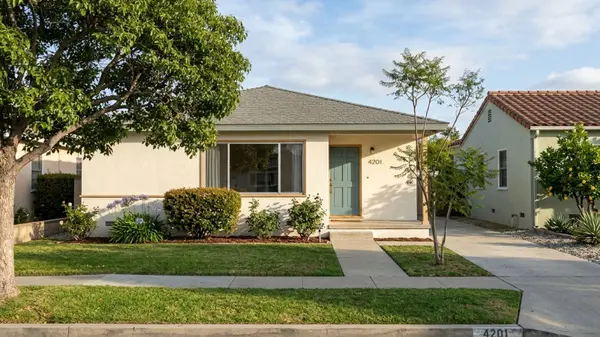
This is the most common Lakewood play, simply because houses make up nearly all of what sells and are what most renters here expect to lease. Nine of every ten Lakewood home sales in the latest 90-day window were single-family houses. The return on this strategy rests on loan paydown, modest appreciation, and rent growth subject to state caps.
Paying full asking price for a house means cash flow is thin or negative at FMR-level rents unless you put down more than the minimum. This is a long hold, not an immediate income play.
Adding an ADU or junior ADU
A single-family house on a lot the City of Lakewood confirms can take an ADU is the strongest answer to the rent-math gap. If you want a property that can eventually cover more of its own costs, adding a second rentable unit directly addresses the issue. State law gives cities a fixed 60-day deadline to approve or deny a complete ADU application and prohibits local agencies from imposing owner-occupancy requirements on standard ADUs.
Locally, the City of Lakewood requires any rental of an ADU or JADU to be for a minimum term of 31 days. You can also ask the planning department whether a specific lot qualifies for an SB 9 split, which allows up to two primary units on qualifying lots.
The catch is that construction cost and permit time come first, and no rent arrives until the unit is finished. Lot size, setbacks, and utility connections can rule a property out, so confirm feasibility with the city before pricing an ADU into your offer. Check ROI upgrades and value-add projects to see how these additions affect the property's numbers.
Living in one unit and renting another
This works well if you want the lowest cash outlay to get started. By using owner-occupant financing, you can buy a property and rent out an ADU, a second unit, or individual rooms. FHA loans for one- to four-unit properties require a minimum 3.5% down payment, provided at least one borrower uses a unit as their primary residence and moves in within 60 days of closing.
You can review homebuyer and down payment programs or a first-time buyer guide to see how these loans work in practice. What you give up is flexibility: owner-occupant loans require you to live there, typically for a set period, and some programs restrict renting out part of the home. Confirm the rules before you plan rental income around them.
Short-term and furnished rentals
Effective May 25, 2023, all short-term rentals, defined as renting any portion of a dwelling for periods under 31 consecutive days, are banned in the City of Lakewood. Previously issued permits were phased out by June 2024. Furnished 30-day-plus rentals are the fallback for investors looking to target traveling professionals or medium-term tenants.
City rules decide whether this strategy exists at all, and HOA rules can add a second layer of restriction. A property underwritten on nightly rates loses its entire premise in this city, so confirm all rental minimums before buying.
Flipping and value-add strategies in Lakewood
Buying a property to renovate and resell requires finding a home priced below its potential after-repair value. In a market where houses routinely sell at or above asking price, finding that initial discount is the hardest part of the process.
Investors looking to flip or force appreciation have to target specific property conditions or look outside the dominant single-family segment. The exit is generally fast once the work is done, but the entry requires patience and a willingness to take on projects that retail buyers avoid.
Fix-and-flip
As-is or estate-condition single-family homes make sense if you want a quick resale after renovating. Lakewood houses went under contract in a median 34 days in the latest 90-day window, so a finished flip shouldn't sit long. The informal 70% rule suggests your maximum purchase price should be 70% of the after-repair value minus repair costs, but that's hard to apply where houses already sell at a premium.
Discounts have to come from condition, such as probate or neglected sales, rather than standard negotiation. Factor in seller closing costs for the flip exit. Finding a house priced low enough to meet that threshold means competing for rare distressed properties, and commissions on the resale come out of a profit spread that's already narrow.
Condos, townhomes and small multifamily
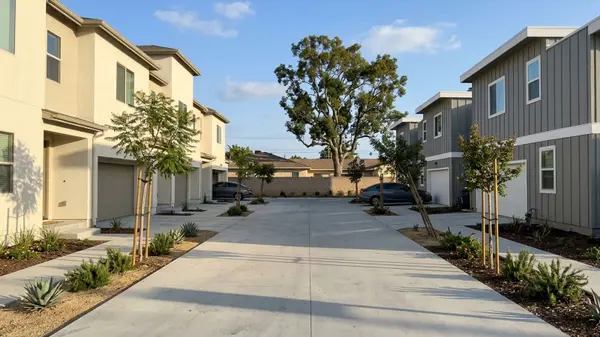
Condos and townhomes are the place to look if you want the most room to negotiate on price. Only 9 of 117 Lakewood sales in the latest 90-day window were something other than a single-family house, and there were 17 non-single-family listings against those 9 sales, pushing the all-homes months of supply to 2, slightly above the single-family figure of 1.7.
That said, 9 sales is too few for a reliable price figure, so treat any aggregate numbers in this segment with caution. HOA dues, rental caps, minimum lease terms, and FHA approval can each limit renting or resale. Ask the HOA for current dues and rental rules, and ask your lender whether the project is FHA-approved before you offer.
What to check before you buy a Lakewood investment property
Under Proposition 13, property tax reassessment happens upon purchase, meaning your base rate resets to the purchase price. Use that figure rather than the seller's current tax bill when running your numbers, and get a landlord insurance quote early in the process to confirm coverage costs.
Because 71.4% of Lakewood's housing units are owner-occupied and a large share of the city's homes were built in the 1950s, order inspections suited to that age. Sewer lateral and electrical panel inspections on older homes can surface hidden capital expenses before they become your problem. If you're buying a tenant-occupied property, ask the seller for leases, rent history, and whether an AB 1482 exemption notice was given.
Verify the local environment by checking schools and safety and crime data through official sources. Confirm school assignment with the district's address lookup rather than relying on a listing description. If you need help pulling recent lease comps or finding current listings that fit your strategy, Rick J. Lee can help you identify properties that match these criteria.
At a glance
- Median sale price, all homes: $893,574, up 1.9% year over year (90 days ending Sept. 30, 2026)
- Median sale price, single-family: $899,641, up 1.9% year over year (90 days ending Sept. 30, 2026)
- Homes sold: 117 all homes, 108 single-family (90 days ending Sept. 30, 2026)
- Median days on market: 36 all homes, 34 single-family (90 days ending Sept. 30, 2026)
- Sale-to-list ratio: 100.5% for all homes and for single-family (90 days ending Sept. 30, 2026)
- Share sold above list: 47.8% all homes, 48.1% single-family (90 days ending Sept. 30, 2026)
- Months of supply: 2 all homes, 1.7 single-family (90 days ending Sept. 30, 2026)
- Homes for sale (inventory): 78 all homes, 61 single-family (90 days ending Sept. 30, 2026)
- Median price per square foot: $631 all homes, $667 single-family (90 days ending Sept. 30, 2026)
Investing in Lakewood, CA real estate FAQs
Is Lakewood, CA a wealthy area?
The median sale price for all homes in Lakewood is $893,574, with a median of $631 per square foot. That price level means investors face a relatively high entry cost compared to national averages, requiring large upfront capital for down payments.
Are home prices dropping in Lakewood, CA?
No, home prices recently rose year over year, as shown in the at-a-glance list above. There were only 61 single-family homes for sale in the latest 90-day window, and that low inventory limits downward price pressure.
Is Lakewood, CA a buyer's or seller's market?
Lakewood is currently a seller's market for single-family homes, which have just 1.7 months of supply. A balanced market typically has five to six months of supply, with readings below five months favoring sellers. The condo and townhome segment looks looser, but that rests on a very small sample of sales.
What is the 3-3-3 rule in real estate?
The 3-3-3 rule is an informal rule of thumb regarding cash reserves, though it has no standard definition. Lenders have specific reserve requirements: Fannie Mae generally requires six months of PITI reserves for a single investment property. Ask your lender how many months of reserves they'll require on a Lakewood rental before you apply.
Does Lakewood, CA have rent control?
California's AB 1482 caps annual rent increases at 5% plus the regional cost of living change, or 10%, whichever is lower. Single-family homes and condos can be exempt from this cap only if the owner provides tenants with a specific written notice stating the exemption. If you're buying a tenant-occupied property, confirm whether that notice was given.
How far is Lakewood, CA from the beach?
Lakewood's city center sits roughly 8 miles from the nearest coastline in Long Beach or Seal Beach. Driving via Clark Avenue to Seal Beach takes about 14 minutes. You can review getting around Lakewood for more details on local commute times and routes.
Is Lakewood, CA part of Long Beach or Los Angeles?
Lakewood is its own incorporated city within Los Angeles County, sharing a border with Long Beach. For investors, that means ADU permits, zoning codes, and short-term rental rules come directly from the City of Lakewood, not from Long Beach or Los Angeles.
What is Lakewood, California known for?
Lakewood is known as a planned postwar suburb, and the largest share of its housing stock was built in the 1950s. For investors, that housing age makes sewer lateral and electrical panel inspections a priority during due diligence. You can read more about the city's origins in this Lakewood history overview.
Sources
- Redfin: Data Center
- Federal Register: Fair Market Rents
- Freddie Mac: Primary Mortgage Market Survey
- Lower: Conventional Investment Property Loans
- Los Angeles County Assessor: Real Property
- City of Lakewood: Short-Term Rentals
- City of Lakewood: Ordinance 2026-5
- California HCD: Housing Law Fact Sheets
- California Legislative Information: SB 9
- HUD: FHA Single Family Housing Policy Handbook 4000.1 Draft
- California Legislative Information: AB 1482
- Distance Cities: Lakewood to Seal Beach
- US Property Stats: Housing Inventory
- U.S. Census Bureau: QuickFacts Lakewood city, California
Categories
- All Blogs (290)
- Aliso Viejo, California (2)
- Anaheim, Calfornia (5)
- Beach House (2)
- Best places for surfers (1)
- Bixby Knolls (1)
- Buena Park, California (2)
- Buying and Selling Real Estate (75)
- Buying or Seller Real Estate (2)
- California (2)
- California Beach House (2)
- Cerritos, California (1)
- Costa Mesa, California (1)
- Current Market (5)
- Cypress, CA (5)
- Dana Point, California (1)
- Downey, California (1)
- Equestrian (1)
- Fountain Valley, California (5)
- FSBO (1)
- Fullerton, California (1)
- Fur Parents (1)
- Garden Grove California (6)
- History (4)
- Holiday in Long Beach (1)
- home (12)
- Home Improvement (1)
- home value (7)
- Huntington Beach (5)
- Irvine, California (3)
- La Habra, California (1)
- Laguna Niguel, California (1)
- Lake Forest, California (1)
- Lakewood Event (2)
- Lakewood, California (53)
- Lifestyle (3)
- Listing (1)
- Long Beach Events (1)
- Long Beach Neighborhood (7)
- Long Beach, California (78)
- Los Alamitos (1)
- Los Alamitos, California (2)
- Market Reports (8)
- Mission Viejo, California (1)
- Mortgage Lender (1)
- Moving to Aliso Viejo, California (2)
- Moving to Anaheim, California (4)
- Moving to Buena Park, California (2)
- Moving to California (11)
- Moving to Cerritos, California (1)
- Moving to Costa Mesa, California (1)
- Moving to Cypress, CA (4)
- Moving to Dana Point, California (1)
- Moving to Downey, California (1)
- Moving to Fountain Valley, California (4)
- Moving to Fullterton, California (1)
- Moving to Garden Grove, California (5)
- Moving to Huntington Beach (5)
- Moving to Irvine, California (3)
- Moving to Lakewood (4)
- Moving to Lakewood, California (7)
- moving to Long Beach, California (17)
- Moving to Los Alamitos, California (2)
- Moving to Los Angeles (1)
- Moving to Mission Viejo, California (1)
- Moving to Newport, California (3)
- Moving to Orange County, California (20)
- Moving to Orange, California (2)
- Moving to Placentia, California (1)
- Moving to Rossmoor, California (1)
- Moving to San Clemente, California (2)
- Moving to Seal Beach, California (4)
- Moving to Signal Hill, California (2)
- Moving to Stanton, California (1)
- Moving to Tustin, California (2)
- Moving to Westminster, California (3)
- New Developments (1)
- Newport Beach, California (3)
- Orange County, California (10)
- Orange, California (3)
- Placentia, California (1)
- Real Estate (47)
- Real Estate Agent (29)
- Rossmoor, California (1)
- San Clemente, California (2)
- San Juan Capistrano, California (1)
- Saving Money (1)
- Seal Beach, California (6)
- Signal Hill, California (5)
- Social Media (1)
- Stagnation (1)
- Stanton, California (1)
- Success Story (1)
- surfing (1)
- Tips in Moving (2)
- Tustin, California (3)
- Westminster, California (3)
Recent Posts


GET MORE INFORMATION