

Average Rent in Lakewood, CA, in 2026: House Leases, Rent Caps, and Buying Options
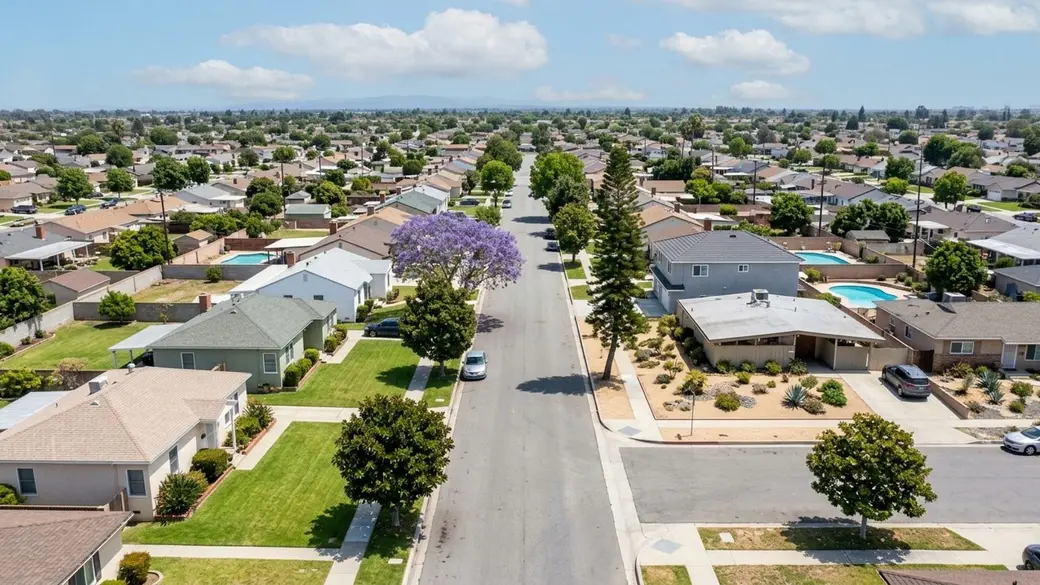
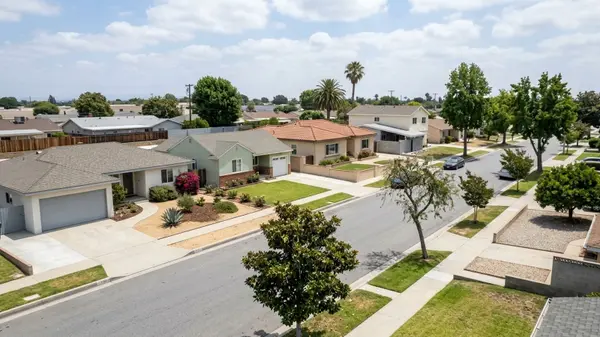
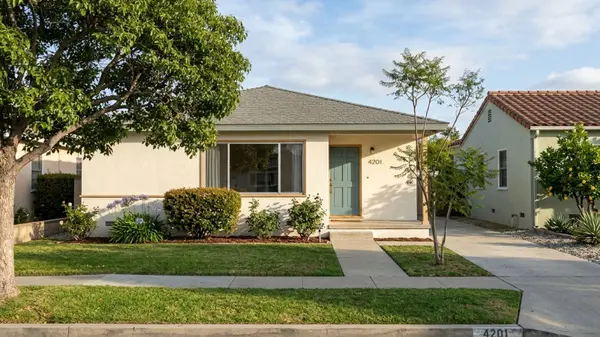
Lakewood's rental market is built around single-family houses. In the 90 days ending September 30, 2026, 108 of the 117 homes sold here were detached houses, while condo and townhome sales were too few to report.
Because houses dominate the supply, the rent figures you see online blend a small apartment stock with larger, individually owned properties. A new lease in this city will most likely be for a house, and that changes the rules on rent increases and security deposits compared to a standard apartment complex.
Key takeaway
The median gross rent blends long-held leases with current ones. A new lease here is most likely a single-family house, so budget from the three-bedroom benchmark and check for the rent-cap exemption notice. If buying instead, expect to compete at or above the asking price.
Who this guide is for
You're planning to rent in Lakewood and need a realistic monthly budget, or you're deciding whether to keep renting or start working toward buying a house here.
Average rent in Lakewood, CA right now
The most recent Census data shows the median household income in Lakewood is $119,177. Before you set a budget, you need to understand the difference between a median rent and an asking rent for a specific unit size, because they tell very different stories.
General data gives you a starting point. Individual lease terms vary based on property type and size, so evaluate a few sources before you commit to a number.
Median rent across all Lakewood rentals
The median gross rent for Lakewood is $2,347, according to the 2020-2024 American Community Survey. That gross rent figure includes utilities the tenant pays, and it also surveys people who may have signed their leases years ago.
Because the survey lags the market and counts long-time tenants, a lease signed now will likely cost more than this median. Think of that figure as a floor, not a current quote, and check live listings before you set your budget.
Rent by bedroom count
The Department of Housing and Urban Development sets Fair Market Rents for the entire Los Angeles-Long Beach-Glendale area, which includes Lakewood. For fiscal year 2026: $2,079 for a studio, $2,328 for a one-bedroom, $2,903 for a two-bedroom, $3,681 for a three-bedroom, and $4,098 for a four-bedroom.
Since houses make up most of the local supply, the three-bedroom line is the realistic starting budget for a house rental. HUD sets these figures at the 40th percentile of metro rents for standard units, meaning roughly six in ten comparable rentals in the metro area will cost more. Treat them as a lower bound, not a target.
Renting a house or an apartment in Lakewood
Houses give renters more space and make up most of what's available. Larger apartment buildings tend to bring on-site management and state rent-cap coverage. Renting a house usually means dealing with an individual owner instead.
Where you rent determines which state laws apply to your lease, and it dictates the maximum security deposit a landlord can demand.
Where Lakewood's rentals come from
According to the 2020-2024 Census estimates, 71.4% of Lakewood's homes are owner-occupied, leaving 28.6% of housing units as rentals. Much of that rental supply consists of individually owned houses, a direct result of the city beginning as a planned community of 17,500 houses built in the early 1950s.
When you rent a single-owner property, repairs and lease renewals depend on one person's finances, and there's no on-site leasing office to escalate issues to. Ask upfront how maintenance requests are handled and how quickly you can expect a response.
Rent caps and deposits for house rentals
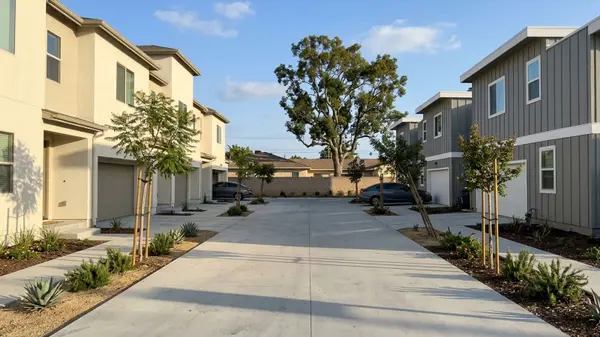
California law (AB 1482) caps annual rent increases at 5% plus inflation, with a hard 10% maximum. Single-family homes and condos not owned by a corporation or REIT are exempt if the owner includes a specific written notice in the lease. Buildings under 15 years old are also exempt.
Under AB 12, most California landlords can't ask for more than one month's rent as a security deposit. A narrow exception allows a landlord to charge up to two months' rent if they own no more than two rental properties with a total of four or fewer units. Read the lease for the AB 1482 exemption notice, and ask the landlord directly whether they qualify as a small landlord for deposit purposes.
Rent by ZIP code in Lakewood
HUD also publishes Small Area Fair Market Rents, which act as voucher payment ceilings set by ZIP code. They're useful for comparing different parts of town against one another, even if they don't perfectly match current asking rents.
These are payment standards, not live market data, so use them as a baseline for how rental pricing shifts across city boundaries before you start browsing specific listings.
ZIP code 90712
The 90712 area covers the southwestern portion of the city and stretches into neighboring areas. The HUD benchmarks for two-bedroom and three-bedroom units here let you see how this area compares to broader Los Angeles County averages.
ZIP code boundaries don't follow city limits, so a 90712 address isn't automatically in Lakewood. The city limits decide which local rules apply, so confirm the address with the city or USPS before you rely on the benchmark.
ZIP code 90713
Covering the eastern side of the city, 90713 is a primary area for single-family house rentals. The three-bedroom benchmark here is the figure that matters most if you're looking to rent a detached house.
A small-area benchmark is a voucher payment ceiling, not an asking rent. Compare it against three or four current 90713 listings for the same bedroom count before you settle on a budget number.
ZIP code 90715
The 90715 ZIP code sits at the northern edge of the city. Renters looking for smaller units can check the one-bedroom and two-bedroom benchmarks here to see if this area offers a lower starting point.
Check how many rentals are listed in 90715 when you search. If only a few are available, the benchmark tells you little about what you can lease this month.
Renting vs. buying in Lakewood
The median sale price for a single-family home in Lakewood was $899,641 over the 90 days ending September 30, 2026. Moving from renting to buying means trading a monthly lease payment for upfront cash requirements and a fixed mortgage.
You need to look at the monthly carrying costs and understand how competitive the market is for buyers before that decision makes any sense.
What a median Lakewood house costs to own each month
A 20% down payment on that median price is $179,928, leaving a loan balance of $719,713. At a 7.03% interest rate, the average for a 30-year fixed mortgage in late September 2026, the principal and interest payment is substantial. Property taxes add more, combining California's base rate with local voter-approved levies.
That monthly total often exceeds the three-bedroom rent benchmark by a wide margin. For most renters, the wall isn't the monthly payment, it's the upfront cash: roughly $180,000 down before closing costs. Get a homeowners insurance quote and a lender pre-approval to compare a real mortgage payment against your current rent, and explore financing and down payment help to offset some of those initial costs.
How competitive buying is in Lakewood
Buyers face a tight market. Over the last three months, 48.1% of Lakewood single-family homes sold for more than their asking price, so plan to offer at or above asking about half the time. With only 1.7 months of supply, sellers hold the advantage.
Prices rose year over year at a modest pace. At that pace, waiting a year to buy adds about $17,000 to the median house price. With so little supply, buyers have little room to ask for credits or repairs, and offers above list can run into an appraisal gap you'd have to cover in cash. You can review current housing market trends to see how these factors shift week to week.
How much rent can you afford in Lakewood?
A common guideline is to spend no more than 30% of your gross income on housing. To find your target salary, take the monthly rent, divide by 0.30, and multiply by 12. Applying that to the $2,903 two-bedroom benchmark means you need a gross household income of about $116,120 a year. For the three-bedroom benchmark, the target rises to roughly $147,240.
Many landlords screen for an income of 2.5 to 3 times the monthly rent. That's a common practice, not a law, so ask each landlord their income and credit screening requirements before paying an application fee.
You'll also need move-in cash, typically the first month's rent plus a one- or two-month deposit. Review the overall cost of living to see how the rest of your household budget fits around these housing costs.
How to narrow your Lakewood rental search
Start by deciding if you need a house or if an apartment would work. For a house, budget from the three-bedroom benchmark and review the rent caps and deposits section. For an apartment, start with the studio or one-bedroom figures and look at where the rentals come from.
If a capped rent increase at renewal matters to you, check whether the lease includes the AB 1482 exemption notice before you sign. Then consider whether one part of the city runs cheaper for the unit size you need. Compare the ZIP code benchmarks, and confirm the address is inside city limits.
You can explore different neighborhoods and look into commute and transit options to see which area fits your daily routine. If you have children, confirm school assignment by address with the district's own boundary lookup, and check local safety statistics. If you could buy within a year or two, work through what a median house costs to own and how competitive the market is before committing to a long lease.
If you're weighing a lease against buying, Rick J. Lee can compare current rentals and listings with you. Rent rules summarized here are general information. Confirm all lease terms with the landlord or a tenant-rights resource.
At a glance
- Median sale price, single-family: $899,641, up 1.9% year over year (90 days ending Sept. 30, 2026)
- Median sale price, all homes: $893,574, up 1.9% year over year (90 days ending Sept. 30, 2026)
- Homes sold: 117 all homes, of which 108 single-family; condo and townhome sales under 10, too few to report (90 days ending Sept. 30, 2026)
- Median days on market: 34 single-family, 36 all homes (90 days ending Sept. 30, 2026)
- Sale-to-list ratio: 100.5% for single-family and all homes (90 days ending Sept. 30, 2026)
- Sold above list: 48.1% single-family, 47.8% all homes (90 days ending Sept. 30, 2026)
- Months of supply: 1.7 single-family, 2 all homes (90 days ending Sept. 30, 2026)
- Homes for sale (inventory): 61 single-family, 78 all homes (90 days ending Sept. 30, 2026)
- Median price per square foot: $667 single-family, $631 all homes (90 days ending Sept. 30, 2026)
Lakewood, CA rent FAQs
What is the median rent in California compared with Lakewood?
The median gross rent for the state of California is $2,036, according to the 2020-2024 American Community Survey. That median is lower than Lakewood's, which the same survey puts higher at $2,347. Both numbers use the same survey years, making this a direct comparison.
What housing is Lakewood, CA known for?
Lakewood began as a planned community when developers broke ground in February 1950 on roughly 3,500 acres of former ranch land. Builders constructed 17,500 houses in three phases between 1950 and 1953, and it became the nation's largest planned community at the time. This history still shapes the rental market today, as detached houses make up the vast majority of the available housing supply.
What credit score do you need to rent in Lakewood?
No state law sets a minimum credit score; each landlord sets its own standard, so ask before paying an application fee. California law (AB 2747) does require landlords of buildings with 16 or more units to offer tenants the option of positive rental payment reporting to credit bureaus, which can help you build credit if you rent in a larger apartment complex rather than a single-family house.
How much rent can I afford in Lakewood on $17 or $20 an hour?
Working full-time at $17 an hour yields $35,360 a year, so spending the recommended share of your income leaves about $884 a month for rent. At $20 an hour, you earn $41,600 a year, giving you a monthly budget of about $1,040. Both of these budgets fall well below the HUD studio and one-bedroom benchmarks for the area.
Can you find rent in Lakewood for $1,500 a month?
A $1,500 budget is below the HUD benchmarks for both a studio and a one-bedroom unit in this area. Rooms in shared houses or backyard units may come in lower, but no official source tracks those prices. Check current listings directly to see if any smaller spaces fit this budget.
How much should rent be on a Lakewood house?
Applying a strict percentage-of-value rule to the single-family median price would imply a rent far above market rates. Lakewood houses rent at much lower levels, as shown by the HUD three-bedroom benchmark. Renting a house here costs much less per month than its sale price implies.
What salary do you need to buy a house in Lakewood?
To afford a median-priced house with a 20% down payment at recent interest rates, your monthly principal, interest, and property tax payment will be substantial. Divide that monthly cost by 0.28, a common lender housing-cost guideline, and multiply by 12, and you'll likely need an income well over $200,000 to qualify comfortably. Lenders apply their own specific debt-to-income ratios, so get pre-approved to find your exact target.
Is Lakewood covered by Los Angeles County rent control?
Lakewood is its own incorporated city in Los Angeles County, and the county's rent stabilization ordinance applies only to unincorporated areas. The city does not have a standalone permanent local rent-control ordinance on file. Statewide AB 1482 still applies to covered rentals, capping annual increases for non-exempt properties.
Sources
- Redfin: Data Center
- Census: Median Gross Rent, Lakewood
- Census: Median Household Income, Lakewood
- Census: Median Gross Rent, California
- HUD: Fair Market Rents
- Census: Housing Tenure, Lakewood
- California Legislative Information: Civil Code 1947.12
- California Legislative Information: Civil Code 1950.5
- Freddie Mac: Mortgage Rates
- City of Lakewood: The Lakewood Story
- California Legislative Information: AB 2747
Categories
- All Blogs (290)
- Aliso Viejo, California (2)
- Anaheim, Calfornia (5)
- Beach House (2)
- Best places for surfers (1)
- Bixby Knolls (1)
- Buena Park, California (2)
- Buying and Selling Real Estate (75)
- Buying or Seller Real Estate (2)
- California (2)
- California Beach House (2)
- Cerritos, California (1)
- Costa Mesa, California (1)
- Current Market (5)
- Cypress, CA (5)
- Dana Point, California (1)
- Downey, California (1)
- Equestrian (1)
- Fountain Valley, California (5)
- FSBO (1)
- Fullerton, California (1)
- Fur Parents (1)
- Garden Grove California (6)
- History (4)
- Holiday in Long Beach (1)
- home (12)
- Home Improvement (1)
- home value (7)
- Huntington Beach (5)
- Irvine, California (3)
- La Habra, California (1)
- Laguna Niguel, California (1)
- Lake Forest, California (1)
- Lakewood Event (2)
- Lakewood, California (53)
- Lifestyle (3)
- Listing (1)
- Long Beach Events (1)
- Long Beach Neighborhood (7)
- Long Beach, California (78)
- Los Alamitos (1)
- Los Alamitos, California (2)
- Market Reports (8)
- Mission Viejo, California (1)
- Mortgage Lender (1)
- Moving to Aliso Viejo, California (2)
- Moving to Anaheim, California (4)
- Moving to Buena Park, California (2)
- Moving to California (11)
- Moving to Cerritos, California (1)
- Moving to Costa Mesa, California (1)
- Moving to Cypress, CA (4)
- Moving to Dana Point, California (1)
- Moving to Downey, California (1)
- Moving to Fountain Valley, California (4)
- Moving to Fullterton, California (1)
- Moving to Garden Grove, California (5)
- Moving to Huntington Beach (5)
- Moving to Irvine, California (3)
- Moving to Lakewood (4)
- Moving to Lakewood, California (7)
- moving to Long Beach, California (17)
- Moving to Los Alamitos, California (2)
- Moving to Los Angeles (1)
- Moving to Mission Viejo, California (1)
- Moving to Newport, California (3)
- Moving to Orange County, California (20)
- Moving to Orange, California (2)
- Moving to Placentia, California (1)
- Moving to Rossmoor, California (1)
- Moving to San Clemente, California (2)
- Moving to Seal Beach, California (4)
- Moving to Signal Hill, California (2)
- Moving to Stanton, California (1)
- Moving to Tustin, California (2)
- Moving to Westminster, California (3)
- New Developments (1)
- Newport Beach, California (3)
- Orange County, California (10)
- Orange, California (3)
- Placentia, California (1)
- Real Estate (47)
- Real Estate Agent (29)
- Rossmoor, California (1)
- San Clemente, California (2)
- San Juan Capistrano, California (1)
- Saving Money (1)
- Seal Beach, California (6)
- Signal Hill, California (5)
- Social Media (1)
- Stagnation (1)
- Stanton, California (1)
- Success Story (1)
- surfing (1)
- Tips in Moving (2)
- Tustin, California (3)
- Westminster, California (3)
Recent Posts


GET MORE INFORMATION
